
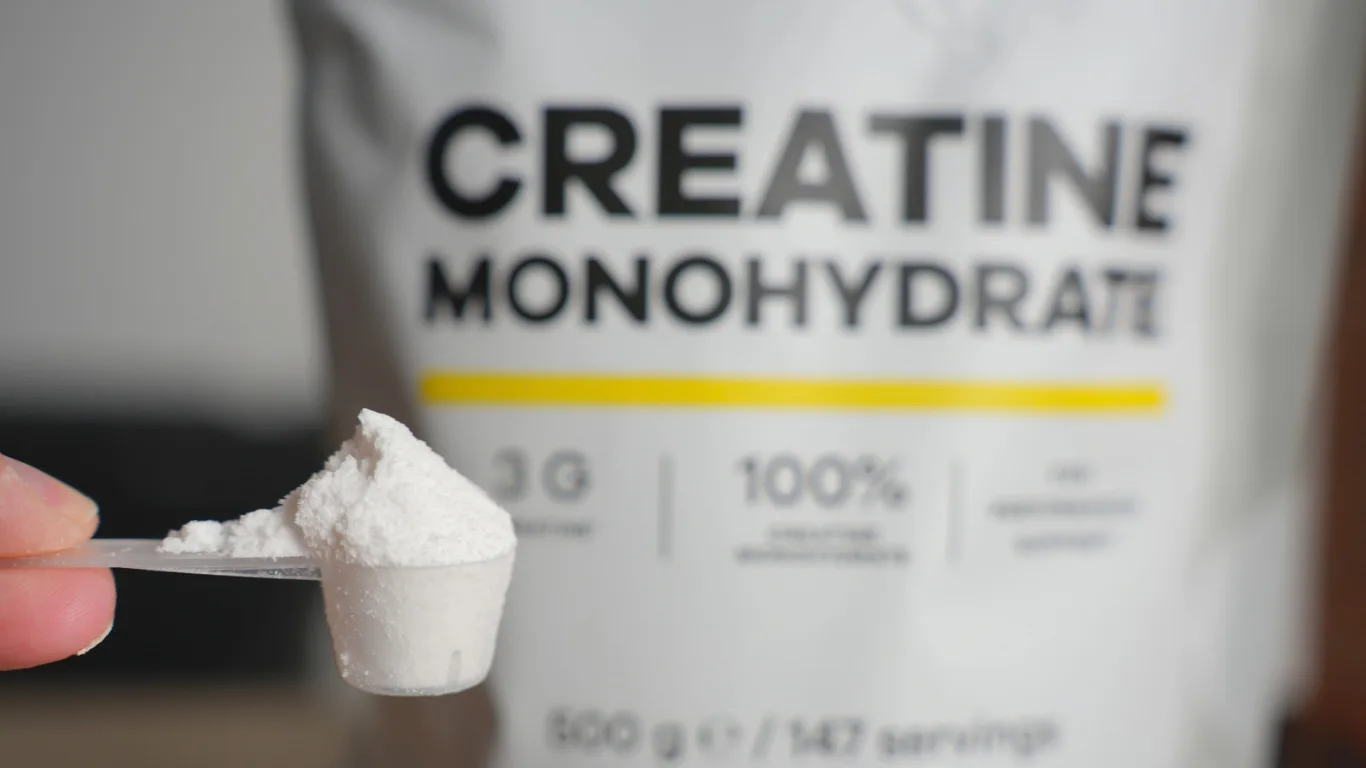
Best Creatine Supplements in 2026: Bodybuilding Ideas for Power
Quick answer: the Best Creatine supplements for bodybuilders in 2026
For bodybuilders and hypertrophy-focused lifters, the defensible pick is pure creatine monohydrate powder at roughly 3-5 g per day, from a brand with a simple label and ideally third-party batch testing. A 2026 review in the Journal of the International Society of Sports Nutrition (JISSN), synthesizing three decades of research, concludes that creatine monohydrate consistently supports high-intensity performance, strength, lean mass, and training adaptations [8]. Men’s Health, working with creatine researcher Jose Antonio, PhD, gives nearly identical shopping advice: pure monohydrate, about 5 g per serving, with NSF, Informed Sport, or equivalent certification [4].Key takeaways
- Creatine monohydrate is the reference form. The 2026 JISSN review names it the best-established option over hydrochloride, ethyl ester, buffered forms, and nitrate [8].
- Monohydrate is about 88% creatine by weight with reported bioavailability above 99% [8].
- 3-5 g daily, taken consistently, matters more than the exact clock time you drink it.
- A loading phase is optional, not required. It just fills muscle stores faster.
- Side-effect rates look similar to placebo. A safety analysis covering 685 clinical trials and over 26,000 participants found side effects in 14% of creatine studies versus 13% of placebo studies [8].
- Cost per 5 g varies enormously. ConsumerLab found a range of $0.13 to $1.85 to obtain 5 g across tested products [6].
- Creatine supports training. It doesn’t replace it. Progressive overload, protein, calories, and sleep still do the heavy lifting.
- Labels change. Verify certifications, serving size, and ingredients on the live listing before buying.
Best Creatine supplements: comparison table
All five are unflavored creatine monohydrate powders, which is exactly the point. The comparison comes down to sourcing claims, testing programs, and how the powder fits your routine. Only details verifiable from the brands’ own product information are stated below; blanks mean “check the current listing.”| Product | Form | Stated sourcing | Flavor | Buyer fit (cautiously phrased) |
| Sports Research® Creatine Monohydrate Creapure® | Powder | Marketed as Creapure® creatine monohydrate | Unflavored | Lifters who want the Creapure designation in a large tub format |
| Momentous Creatine Creapure Performance Monohydrate | Powder | Marketed as Creapure® creatine monohydrate | Unflavored | Competitors and tested athletes who prioritize third-party certification programs |
| Thorne Creatine Monohydrate | Powder | Micronized creatine monohydrate | Unflavored | Lifters who want NSF Certified for Sport on a simple single-ingredient powder |
| Pure Creatine Monohydrate | Powder | Creatine monohydrate, marketed without artificial ingredients | Unflavored | Beginners who want a no-frills single-ingredient powder |
| Klean Athlete Performance Creatine | Powder | Creatine monohydrate | Unflavored | Strength athletes in drug-tested settings who value NSF Certified for Sport |
Heads up: product details, availability, prices, labels, ingredients, certifications, serving sizes, and packaging can all change without notice. Always confirm the current label and certification status on the live product page before you buy.
1. Sports Research® Creatine Monohydrate Creapure®
Sports Research® Creatine Monohydrate Creapure® is an unflavored creatine monohydrate powder marketed as using Creapure®, the German-manufactured monohydrate ingredient brand. Sports Research was among the brands included in ConsumerLab’s September 17, 2026 creatine review, which tested 11 products for creatine content and degradation to creatinine; one product in that round failed and was not approved [6].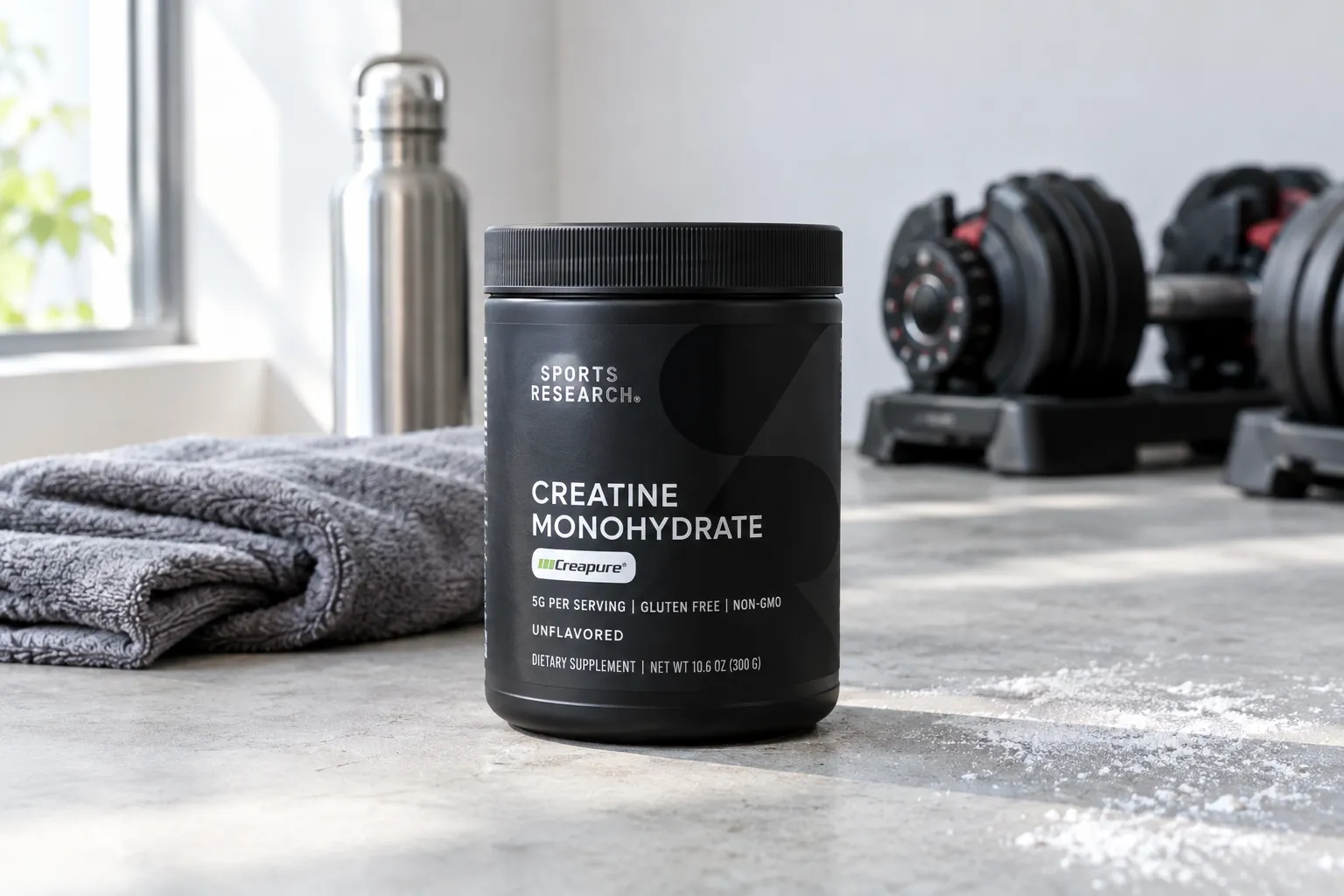 Who it suits: hypertrophy-focused lifters who want the Creapure® designation and prefer buying a larger tub so a daily 5 g habit doesn’t require monthly reordering.
Pros
- Unflavored, so it mixes into water, juice, or a protein shake without clashing
- Creapure® is a widely recognized monohydrate ingredient designation
- Simple positioning as a single-purpose creatine powder
- Unflavored powder can taste chalky in plain water for some lifters
- Ingredient-brand sourcing claims don’t guarantee anything about third-party batch testing. Verify separately
- Larger tubs mean a bigger upfront spend
2. Momentous Creatine Creapure Performance Monohydrate
Momentous Creatine Creapure Performance Monohydrate is an unflavored creatine monohydrate powder marketed as using Creapure®. Momentous was also among the brands ConsumerLab included in its 2026 creatine testing round [6]. The brand positions its supplement line around third-party certification for athletes subject to drug testing.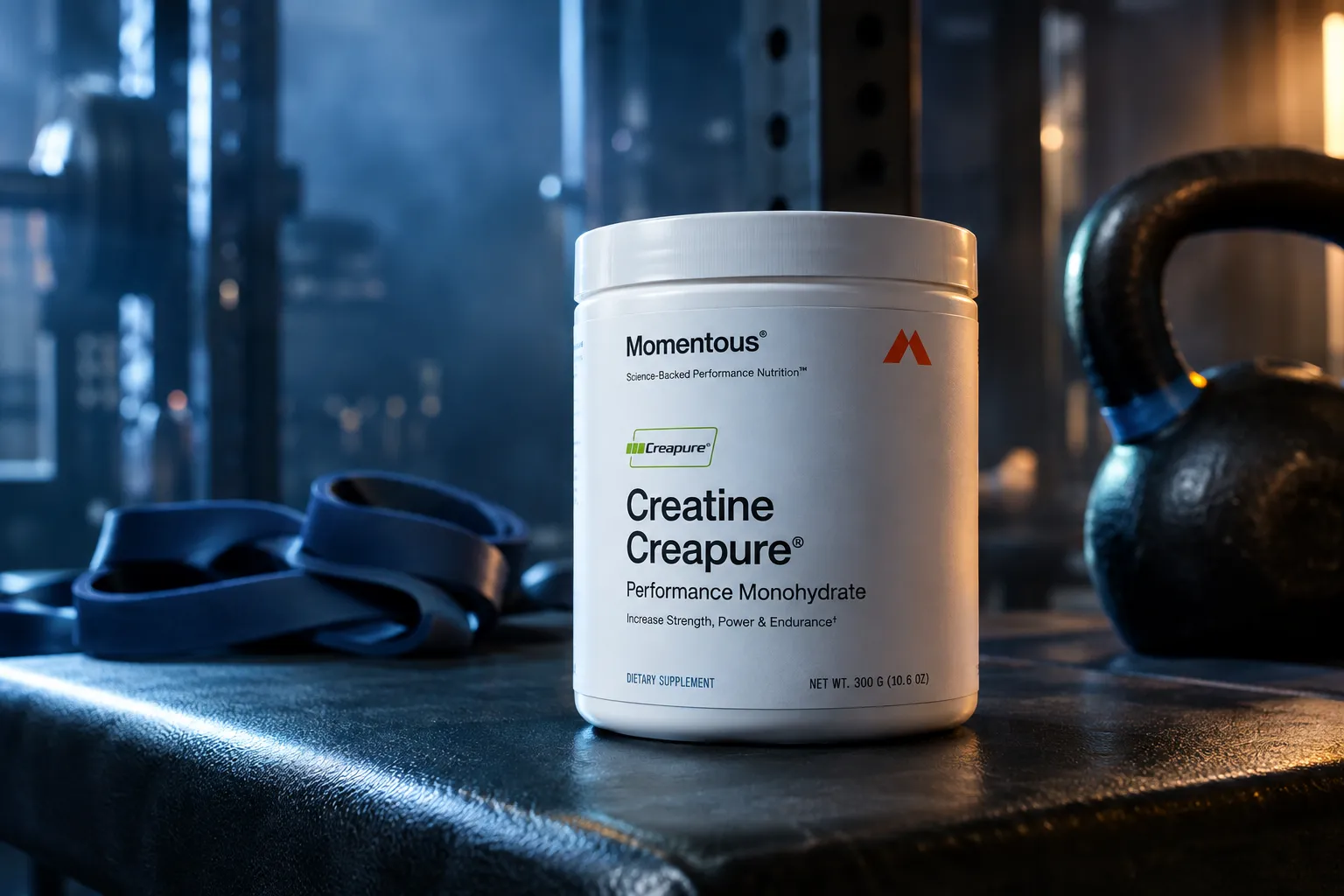 Who it suits: competitive bodybuilders, powerlifters, and collegiate or federation-tested strength athletes who want documented certification and are comfortable paying more for it.
Pros
- Creapure® monohydrate sourcing claim
- Brand builds its identity around third-party testing programs for tested athletes
- Unflavored powder works in any pre- or post-workout drink
- Typically positioned at a premium versus commodity monohydrate
- Certification programs and package sizes can change. Check the current listing
- Nothing about the formula itself outperforms plain monohydrate; you’re paying for sourcing and testing assurance
3. Thorne Creatine Monohydrate
Thorne Creatine Monohydrate is an unflavored, micronized creatine monohydrate powder that is NSF Certified for Sport. Men’s Health selected Thorne’s creatine powder as its top overall product in its August 18, 2026 guide, noting 5 g of micronized creatine monohydrate per serving and NSF Certified for Sport status, listed at roughly $0.44 per 5 g serving at publication [4]. ConsumerLab also included Thorne in its 2026 test round [6].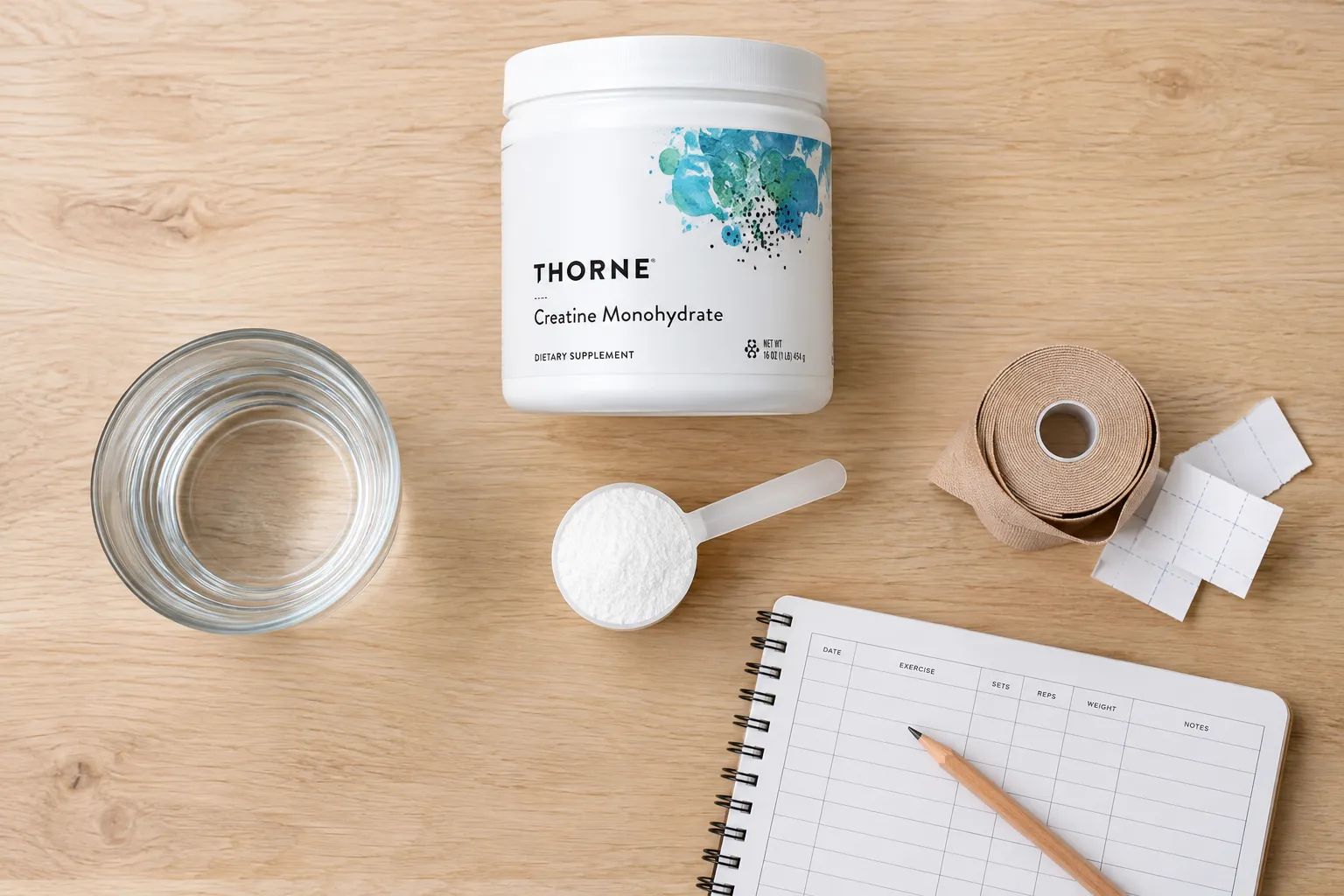 Who it suits: lifters who want the shortest possible ingredient list plus a recognized sport certification, and who care about mixability. Micronized creatine monohydrate has a less particle size that tends to disperse more easily.
Pros
- NSF Certified for Sport, one of the certifications Men’s Health recommends looking for [4]
- Micronized powder for easier mixing
- 5 g per serving matches the dose used in most research
- Priced above commodity monohydrate powders
- Unflavored only, so flavor-seekers will need to mix it into something
- Prices and certification status can change between the guide’s publication and your purchase
4. Pure Creatine Monohydrate
- Straightforward single-ingredient positioning
- Unflavored so that it won’t interfere with a flavored shake
- Nothing extra to react to if you’re sensitive to additives or stimulants
- Lesser-known brands warrant closer label and testing verification
- Third-party certification status should be confirmed directly on the current listing
- No published independent test result was identified for this specific product
5. Klean Athlete Performance Creatine
- Brand line built around NSF Certified for Sport
- Unflavored monohydrate, easy to stack with protein powder
- Clear positioning for athletes in tested federations
- Certification comes with a price premium over commodity powders
- Serving size and container size should be verified on the current listing
- Unflavored powder requires mixing into something palatable for some users
What is creatine and how does it work?
Why bodybuilders use creatine monohydrate for power
- Sets 2 through 5 are where it shows. The first heavy set rarely feels different. The later sets hold up better.
- Strength and power carry over to volume. Slightly heavier working weights across a mesocycle mean more total mechanical tension.
- Early scale weight changes are partly water. Creatine draws water into muscle cells. That’s intramuscular, not subcutaneous, so it typically looks fuller rather than softer.
Creatine monohydrate vs creatine HCl: which is better?
Powder vs capsules
Powder wins on dose practicality. Getting 5 g from capsules often means swallowing 5 or more, and it usually costs more per gram. Capsules win on travel and on taste avoidance. Most bodybuilders default to unflavored creatine powder at home.How much does creatine cost?
- Cheap end: large bulk tubs of plain monohydrate, minimal certification
- Middle: certified single-ingredient powders (NSF Certified for Sport, Informed Sport) and Creapure®-designated products
- Expensive end: gummies, single-serve sticks, flavored blends, and multi-ingredient formulas
Creatine loading phase: necessary or not?
A loading phase isn’t necessary. It’s a speed option. Loading typically means about 20 g per day, split into four doses, for 5-7 days, then 3-5 g daily. Starting at 3-5 g daily reaches similar muscle saturation, just over roughly three to four weeks instead of one. Choose loading if: you have a contest prep phase, meet, or peaking block starting in under three weeks and want to top up stores fast. Skip loading if: you’re a beginner, you’re sensitive to GI discomfort, or you have no deadline. Loading is the phase most likely to cause bloating or stomach upset, mostly because of the large single doses.Creatine dosage, loading phase, and timing for bodybuilding
The evidence-informed default is 3-5 g of creatine monohydrate per day, every day, including rest days. Consistency beats timing.- Pick your dose. 5 g daily suits most lifters. Larger athletes sometimes use slightly more; check with a professional if you’re considering that.
- Pick a fixed anchor. Take it at the same time each day, tied to an existing habit, such as morning coffee, a post-workout shake, or dinner.
- Mix it properly. Use warm water or a shaker and stir vigorously. If powder settles, drink it, then add water and drink again.
- Take it on rest days too. You’re maintaining muscle stores, not fueling a single session.
- Drink normal fluids. Creatine increases intramuscular water; keep hydration sensible, especially in hot training environments.
Creatine supplement side effects and safety
- Stomach upset or bloating, usually from large single doses. Split the dose or take it with food.
- Scale weight increase, typically 1-2 kg early on, largely intramuscular water.
- Powder grit, a mixing issue rather than a health one.
Is creatine safe for beginners?
For healthy adults new to lifting, creatine monohydrate at 3-5 g daily is among the better-studied supplement choices, and the trial data above applies to novices as well as trained athletes [8]. Beginners should skip loading, start at 3-5 g, and clear it with a healthcare professional first if they have any medical condition or take prescription medication. Build the training and nutrition habits first, and creatine won’t compensate for an inconsistent program.Creatine for women vs men
The dosing guidance is the same: 3-5 g of creatine monohydrate daily. ConsumerLab published a 2026 update specifically addressing possible water retention in women [6], which is the concern most often raised by female physique competitors. The water is mostly intramuscular, so the visual effect is usually fullness rather than softness, and it stabilizes after the first few weeks.Why isn’t my creatine working?
The most common reasons are inconsistent dosing, too short a time frame, or expecting creatine to do a training program’s job. Creatine’s effects are subtle and cumulative, not acute. Work through this checklist:- Have you taken it daily for at least 4 weeks? Without loading, saturation takes roughly 3- 4 weeks.
- Are you actually taking the full dose? A “scoop” isn’t always 5 g. Check the label’s gram weight.
- Is your training progressing? Creatine helps you push harder; it doesn’t create overload on its own.
- Are protein and calories adequate? No supplement outruns underfeeding.
- Is your product what it claims? ConsumerLab’s 2026 round failed one of 11 tested products for creatine content or creatinine degradation [6]. Buy from brands with current third-party verification.
- Are you a non-responder? A minority of people start with already-high muscle creatine stores and notice less change.
Creatine vs beta-alanine, and best creatine for muscle gain vs strength
Can you take creatine with protein powder, and does creatine expire?
- Store the tub sealed, cool, and dry, not on a humid bathroom shelf
- Keep the desiccant packet in the container
- Don’t pre-mix a bottle and leave it sitting for days; mix and drink
- Respect the printed best-by date, and discard clumped or hardened powder
Creatine supplements for vegans and vegetarians
Vegans and vegetarians often have lower baseline muscle creatine stores because dietary creatine comes mostly from meat and fish, so that supplementation may produce a more noticeable change. Synthetic creatine monohydrate is manufactured without animal inputs, but vegan certification varies by product, so verify the label rather than assume. Dosing is unchanged at 3-5 g daily.How to choose a high-quality creatine powder
- Ingredient list: creatine monohydrate, ideally alone. Fewer lines means less to vet.
- Dose math: confirm grams per scoop, not just “1 scoop.” Then divide container grams by daily dose to get true servings.
- Certification: look for NSF Certified for Sport or Informed Sport, and confirm it on the current listing, certifications lapse and get added.
- Micronization: helps with mixability if grit bothers you. Only assume it if the label says so.
- Value per serving: compare cost per 5 g, not per tub. ConsumerLab’s $0.13-$1.85 range shows how much that matters [6].
- Format honesty: gummies and sticks cost more for the same compound. Fine if they keep you consistent.
FAQ: Best Creatine supplements
What is the best creatine for muscle growth?Plain creatine monohydrate. The 2026 JISSN review identifies monohydrate as the best-established form for supporting strength, lean mass, and training adaptations, over HCl, ethyl ester, buffered forms, and nitrate [8]. How much creatine should I take?
3-5 g of creatine monohydrate daily, every day including rest days. Men’s Health’s guidance with Jose Antonio, PhD, is roughly 5 g per serving [4]. Do I need a loading phase?
No. Loading (about 20 g daily for 5-7 days) saturates muscle faster, but 3-5 g daily reaches similar levels in about three to four weeks with less GI risk. Does creatine cause fat gain or bloating?
Creatine doesn’t add body fat. Early weight gain is largely intramuscular water, typically 1-2 kg. Bloating is most common during high-dose loading and usually eases at a 3-5 g maintenance dose. Is daily use safe?
For healthy adults, the evidence is reassuring: across 685 trials and more than 26,000 participants, side-effect rates were similar between creatine and placebo [8]. Anyone with kidney disease or another medical condition, who is pregnant or breastfeeding, or who takes prescription medication should speak to a qualified healthcare professional first. When should I take creatine?
Whenever you’ll remember it, post-workout with carbs and protein is a fine default, but total daily consistency matters far more than timing.
Verdict: choosing the best creatine supplement
The Best Creatine supplements for bodybuilding share the same short ingredient list: creatine monohydrate, about 5 g per serving, nothing you didn’t ask for. The differences among the five products reviewed here come down to sourcing designations like Creapure®, third-party certification programs like NSF Certified for Sport, micronization for mixability, and cost per serving. Actionable next steps:- Decide whether certification is non-negotiable. If you compete under anti-doping rules, prioritize a currently certified product and verify the seal on the live listing.
- Do the cost-per-5 g math before you buy, using the actual gram weight per serving.
- Start at 3-5 g daily and skip loading unless you have a deadline within three weeks.
- Give it 4-6 weeks while logging your working weights so that you can judge the effect on repeated hard sets rather than on the scale.
- Keep the fundamentals first: progressive overload, enough protein and calories, and real sleep.
Affiliate disclosure
This article contains affiliate links. If you purchase through one of the product links above, this site may earn a commission at no extra cost to you. That commission does not influence which products we selected or how we described them. This publication did not laboratory-test any product, and it did not rank any product “best overall.” Product details, prices, availability, labels, ingredients, certifications, serving sizes, and packaging may change at any time, so verify current information on the retailer’s listing before purchasing.References
[1] Best Creatine Supplements - https://www.forbes.com/sites/forbes-personal-shopper/article/best-creatine-supplements/[2] Best Creatine - https://www.garagegymreviews.com/best-creatine
[3] Best Creatine For Men - https://www.garagegymreviews.com/best-creatine-for-men
[4] Best Creatine Supplements - https://www.menshealth.com/nutrition/g40182295/best-creatine-supplements/
[5] Best Creatine - https://www.healthline.com/nutrition/best-creatine
[6] Creatine - https://www.consumerlab.com/reviews/review-creatine/creatine/
[7] Best Creatine Supplements - https://fortune.com/article/best-creatine-supplements/
[8] 15502783.2026 - https://www.tandfonline.com/doi/full/10.1080/15502783.2026.2646627
[9] Full - https://www.frontiersin.org/journals/nutrition/articles/10.3389/fnut.2025.1682746/full
[10] Full - https://www.frontiersin.org/journals/nutrition/articles/10.3389/fnut.2025.1578564/full Meta title: Best Creatine Supplements in 2026: 5 Monohydrate Picks Meta description: The best creatine supplements for bodybuilding in 2026: five monohydrate powders compared, plus evidence-based dosage, loading, and safety guidance. Tags: creatine monohydrate, best creatine supplements, bodybuilding supplements, creatine dosage, Creapure, micronized creatine monohydrate, muscle growth, strength training, creatine loading phase, creatine safety, unflavored creatine, hypertrophy